
Retired hard drives can still hold customer records, financial information and other business data. We help organisations plan secure destruction of drives that are no longer needed. Tell us what you have, where it is and what records you need; we will confirm the suitable method, collection arrangements and quote.
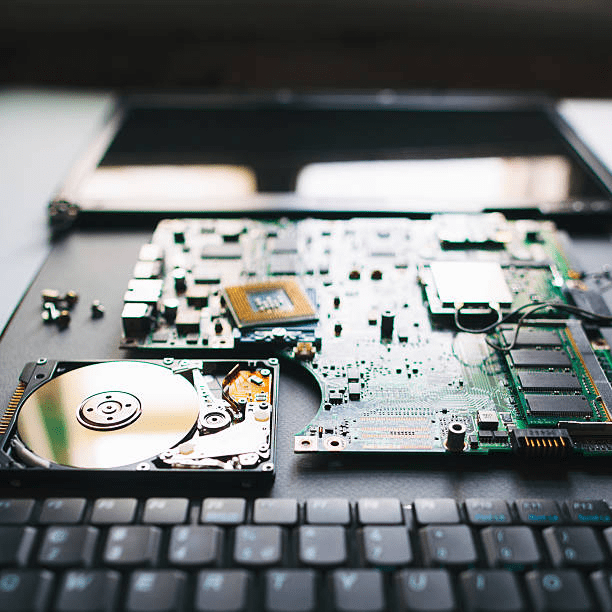
Which storage devices do you need to clear?
We can discuss hard disk drives (HDDs), solid-state drives (SSDs), external drives and storage still fitted inside laptops, desktop PCs or servers. Include the approximate quantity and tell us whether the drives are loose or still installed. We will confirm whether drive removal is included before you book. For mixed media, see our storage media destruction page; for SSD-specific considerations, see SSD destruction.
Choosing a destruction method
Physical destruction may be appropriate when the drives will not be reused. If equipment is to be reused, a suitable and verified data erasure process may be another option. The choice depends on the media, its condition, your data policy and what evidence your organisation requires. Simply deleting files or formatting a drive is not a reliable disposal plan.
HDDs and SSDs store data differently, so tell us which types you have. A magnetic degaussing method is not suitable for flash storage such as SSDs. We will confirm the proposed process for each media type rather than assuming one method fits everything. Our guide to SSD shredding and data wiping explains the choice in more detail.
On-site or off-site destruction
On-site shredding may suit a policy that calls for your team to witness destruction. Alternatively, ask about secure collection for off-site processing. Availability and the arrangements depend on your postcode, the material and the size of the job. If witnessing, individual drive identification or a particular handover procedure matters, mention it when requesting a quote.
From inventory to destruction records
- Describe the drives. Share the drive types, quantities and whether they are installed in equipment.
- Agree the handling. Confirm the collection or on-site arrangement, the proposed destruction method and any inventory requirements.
- Confirm the evidence. Tell us if you need serial numbers recorded, a handover record or a Certificate of Destruction. We will confirm the documentation available for your job before booking.
Records should match your organisation's own audit needs. For questions to ask about the paperwork, read what a data destruction record should show and our chain-of-custody guide.
What affects the quote?
The number and type of drives, whether they must be removed from equipment, your location, the chosen service and the level of recording can all affect the scope. Ask what is included in collection, destruction and documentation. Our hard drive destruction cost guide explains the main pricing factors without assuming a fixed price for every job.
Clearing complete equipment?
If the drives are still inside laptops or servers, tell us whether you also need the remaining equipment handled. We can discuss laptop recycling alongside the treatment of data-bearing storage. Confirm the plan for the drives separately from the plan for the rest of the equipment.
Request a hard drive shredding quote
Send your postcode, approximate number of drives, their types if known, whether they are loose or installed, and any witnessing or documentation requirements. We will confirm what can be provided before you book.